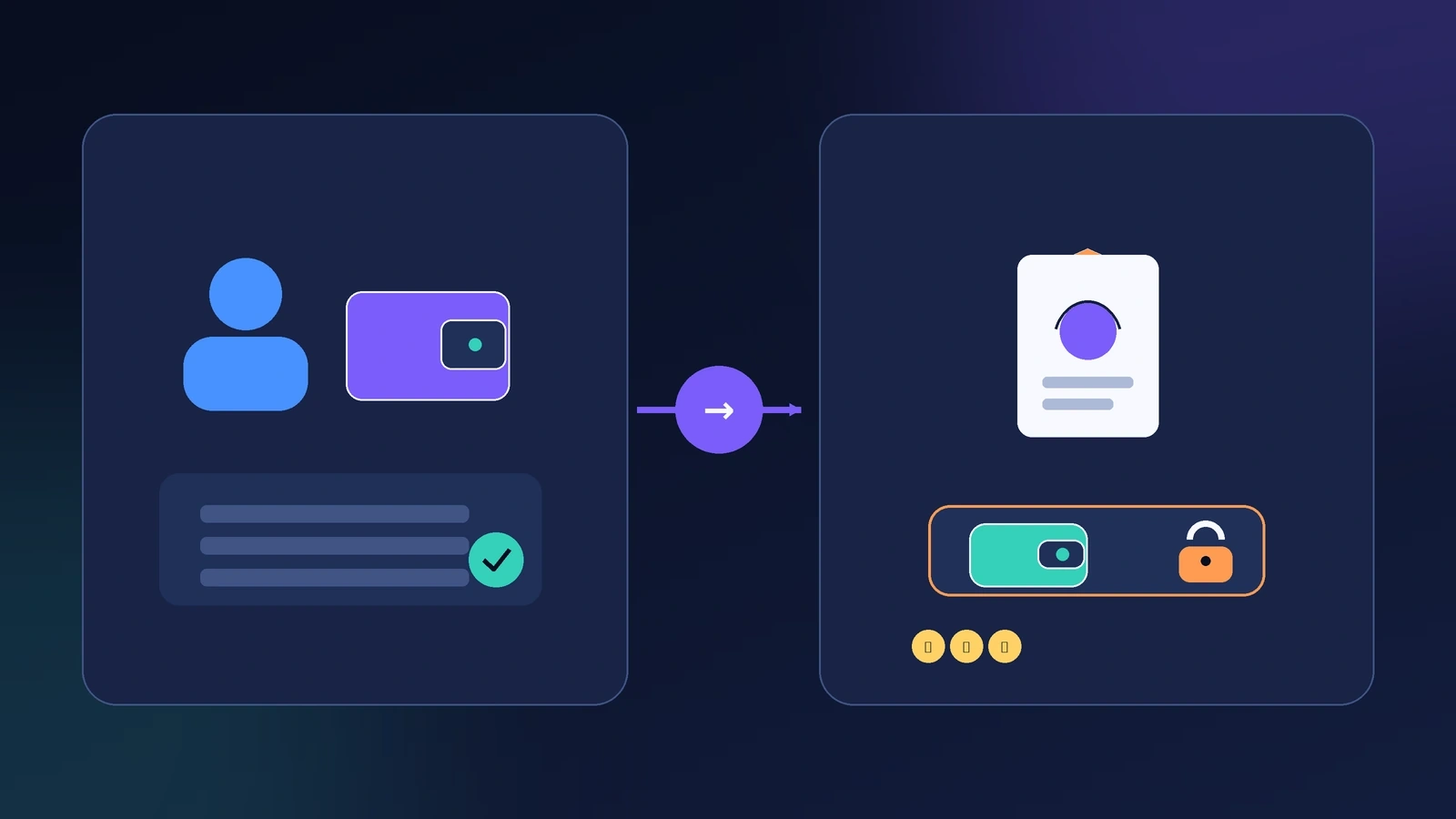

A no-KYC casino may still ask for verification because “no KYC” often means that documents are not required during registration – not that the casino promises never to check a player’s identity.
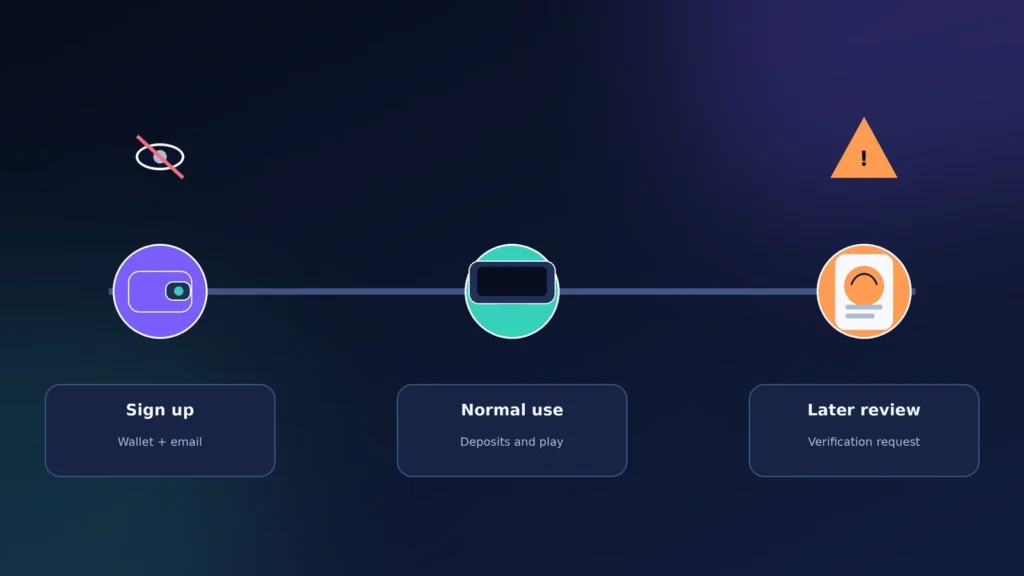
A document request can appear later when the operator reviews a withdrawal, reaches a transaction threshold, detects inconsistent account information, investigates bonus use, checks ownership of a payment method or responds to an anti-money-laundering risk alert.
This distinction matters because many casinos use a risk-based or tiered KYC model. Low-risk accounts may be allowed to register, deposit and play with an email address or connected crypto wallet. Additional checks are introduced only when the account’s activity reaches a particular risk level.
This article provides general information, not legal advice. Gambling laws, operator availability and consumer protections vary by state and licensing jurisdiction.
For U.S. readers, there is another crucial distinction. State-regulated online casinos generally verify identity and age during account creation. New Jersey’s rules, for example, require operators to collect identifying information, record the verification method and date, confirm that the customer is at least 21 and prevent gambling unless the customer is physically located in the state.
Platforms marketed to U.S. readers as no-KYC casinos are therefore typically offshore or foreign-licensed services rather than online casinos authorized by a U.S. state.
Key takeaways
- No KYC commonly means no document upload at signup.
- A first or larger withdrawal can prompt additional review.
- Casinos may conduct background checks even when no ID image is requested.
- Crypto payments do not remove fraud, sanctions or wallet-ownership checks.
- Exact triggers should be disclosed in the casino’s terms, but some operators reserve broad discretion.
- A foreign gaming license does not automatically make a casino legal or locally regulated in a U.S. state.
- Never submit sensitive documents until the operator, request channel and privacy policy have been verified.
What Does “No KYC” Actually Mean?
KYC stands for Know Your Customer. It describes procedures used to establish who controls an account and to evaluate risks such as fraud, underage gambling, money laundering, sanctions exposure and unauthorized account access.
The phrase “no KYC” has no single, universal meaning across the casino industry. Different operators use it for very different account models.
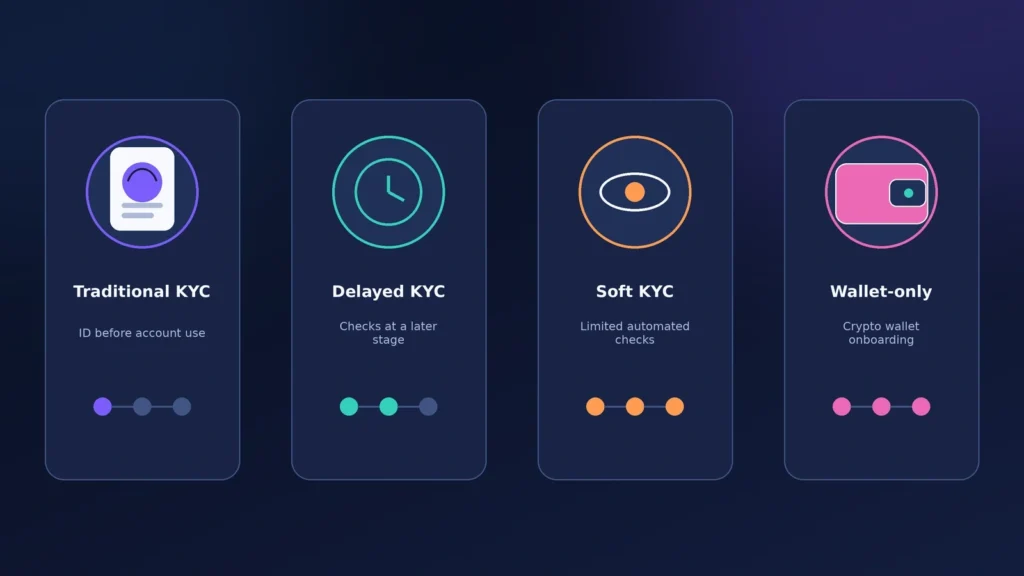
Four common KYC models
| Model | What happens at registration | What can happen later |
| Traditional KYC | Personal details and identity verification are required before deposits or play | Reverification may occur when details change or suspicious activity is detected |
| Delayed or tiered KYC | Registration is allowed without documents | ID may be requested at a withdrawal, cumulative transaction level or risk event |
| Soft KYC | Details are checked against databases, devices, IP information or other sources without an ID upload | Documents are requested if the automated check fails or account risk increases |
| Document-free or wallet-only access | The account may be opened using a wallet, username or email | Security, wallet-origin or jurisdiction checks may still occur under the terms |
New Jersey’s regulated model illustrates traditional KYC. The Division of Gaming Enforcement’s Know Your Customer requirements call for reasonable measures to establish that the person opening an account is who they claim to be before deposits or other customer-initiated activity. Approved methods can include knowledge-based questions, device and phone matching, or government-issued ID.
Offshore crypto casinos are more likely to use one of the other three models.
No KYC at Signup Is Not the Same as No KYC Forever
A casino can allow registration without requesting a passport or driver’s license while still retaining a contractual right to request verification later.
Look for wording such as:
- “KYC may be required.”
- “Verification may be requested at any time.”
- “Additional documents may be requested before withdrawal.”
- “Enhanced due diligence may apply.”
- “The operator may verify the source of funds.”
- “The operator reserves the right to confirm payment ownership.”
- “Withdrawals may be suspended pending security review.”
That language means the account is not guaranteed to remain document-free.
A more transparent operator will explain the circumstances that can trigger a check. A less transparent one may place a broad verification clause deep inside its general terms while using an unqualified “no KYC” headline in its marketing.
The NoKYCCasino.us editorial policy likewise acknowledges that very few platforms are document-free in every situation and that withdrawals, large wins, bonus claims and AML reviews can still trigger checks.
Why No-KYC Casinos Introduce Verification Later
1. The operator has regulatory or licensing obligations
Casinos licensed in offshore jurisdictions may still be subject to customer-identification and anti-money-laundering rules.
The Curaçao Gaming Authority’s AML framework places gambling businesses operating in and from Curaçao under its anti-money-laundering and counter-terrorist-financing supervision, including customer-identification and unusual-transaction obligations.
Under the Curaçao Gaming Authority’s current responsible-gaming policy, licensed operators must complete a government-issued ID check when specified thresholds are reached and, in any case, before a first withdrawal.
That requirement applies to CGA-licensed operators; it is not an industry-wide threshold. Other jurisdictions and operators may impose different timing or additional checks under their own laws, license conditions and risk procedures.
2. The casino needs to confirm who controls the account
A withdrawal is the point at which funds leave the casino’s control. An operator may therefore check that:
- The account has not been stolen.
- The withdrawal was requested by the account holder.
- The destination wallet belongs to or is controlled by the player.
- Account details have not recently been changed.
- A third party is not directing the transaction.
New Jersey’s regulations permit periodic reverification when an operator reasonably suspects that a player’s identity has been compromised. The same regulations require systems to detect suspicious behavior including theft, collusion and money laundering.
Offshore operators may use similar security logic even when their legal requirements differ.
3. Account activity no longer matches the original risk profile
Risk-based systems do not examine only the amount of one withdrawal. They can consider the account’s complete pattern, including:
- Deposit frequency.
- Withdrawal frequency.
- Rapid movement of funds.
- Changes in devices or IP addresses.
- Login attempts from different countries.
- Previously unseen wallet addresses.
- Unusual game or betting patterns.
- Activity inconsistent with the account’s previous use.
FATF guidance for casinos identifies customer due diligence, recordkeeping, suspicious-activity reporting and effective supervision as central controls because the sector can be exposed to money-laundering risks.
In the United States, FinCEN requires covered casinos to operate risk-based AML programs designed to identify and report suspicious transactions. Those U.S. rules do not automatically govern every offshore crypto site, but they illustrate why casino monitoring is often ongoing rather than a one-time signup event.
4. The operator must check age, location or restricted-country status
A casino may need to establish that a customer:
- Meets the applicable minimum gambling age.
- Is not located in a prohibited jurisdiction.
- Has not used false registration information.
- Is not accessing the service through a prohibited VPN or proxy.
- Is not on an exclusion or sanctions list.
For example, New Jersey requires regulated internet-gaming operators to verify that an account holder is 21 and to prevent play unless the customer is physically present in the state.
An offshore casino may have a different minimum age and different restricted-country list. Accessing the website does not prove that an operator accepts players legally from a particular state.
5. The casino suspects multi-accounting or bonus abuse
Promotions are usually limited to one person, household, device, payment method or IP address. Verification may be requested when the operator detects:
- Multiple accounts with similar information.
- Several accounts using one wallet or device.
- Repeated welcome-bonus claims.
- Closely connected betting patterns.
- A payment method associated with another customer.
- Activity intended to transfer value between related accounts.
A check in this situation is designed to establish whether the customer is one person operating several accounts or whether genuinely separate adults are using the same household connection.
6. The payment method and account details do not match
A casino may request verification when:
- A deposit comes from one person but a withdrawal is requested by another.
- Fiat banking information does not match the registered name.
- The withdrawal wallet differs from the depositing wallet.
- A payment instrument was previously associated with another account.
- The operator cannot establish ownership of a crypto wallet.
The Curaçao Gaming Authority’s June 2026 crypto policy sets out phased requirements for licensed operators to trace the origin and destination of funds, screen for sanctions and fraud-linked wallets, and verify ownership or control of self-hosted wallets.
Using a different wallet is not automatically improper, but it may create an additional ownership question.
7. A source-of-funds review has been triggered
Source of funds means the origin of the money used for gambling. A casino may ask for supporting information when transaction volume is high or the activity appears inconsistent with the available customer information.
Potential requests can include:
- A bank statement.
- Proof of salary or business income.
- Evidence of a cryptocurrency purchase.
- Exchange withdrawal records.
- Blockchain transaction details.
- An explanation of how the gambling balance was funded.
A request for source-of-funds evidence is broader than basic identity verification. It is intended to establish where the money came from, not merely who owns the account.
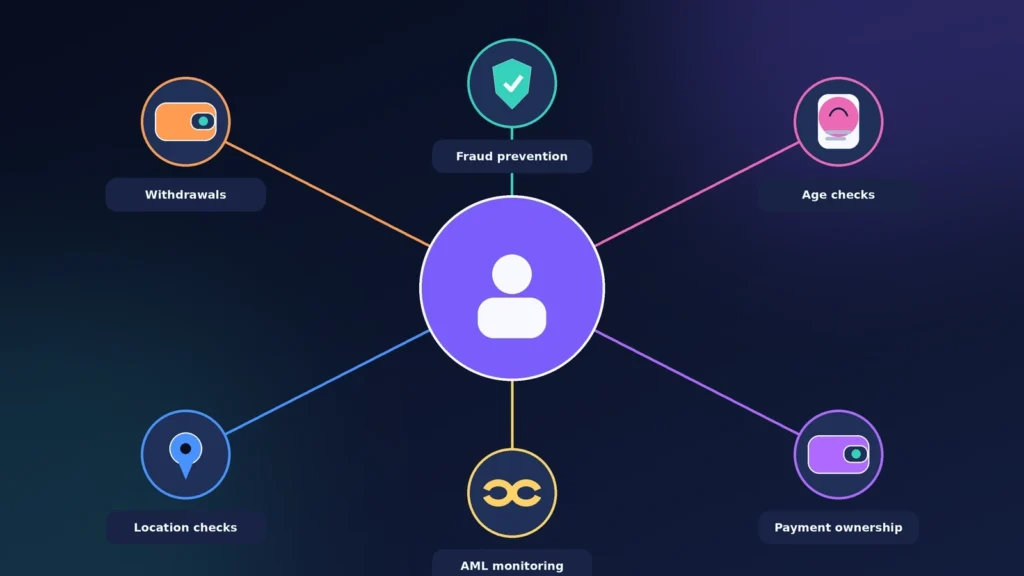
Common No-KYC Casino Verification Triggers
No operator uses exactly the same system, and many do not disclose their internal risk rules. The following table summarizes common possibilities without suggesting that every trigger applies to every casino.
| Possible trigger | Why it may be reviewed | Possible request |
| First withdrawal | Confirms the account and payment destination | ID, selfie or wallet confirmation |
| Larger withdrawal | Increases fraud and compliance exposure | ID, address or source-of-funds evidence |
| Cumulative transaction level | Deposits and withdrawals together reach a policy threshold | Full or enhanced KYC |
| New device or country | Possible account takeover or location conflict | Login confirmation or identity check |
| VPN or proxy inconsistency | Possible restricted-location access | Location or address evidence |
| Different deposit and withdrawal wallets | Ownership cannot be matched automatically | Wallet-control evidence |
| Multiple related accounts | Possible multi-accounting or bonus abuse | ID and household information |
| Changed email, password or phone | Possible unauthorized account access | Selfie, ID or account recovery check |
| Sanctions or blockchain alert | Wallet or transaction requires investigation | Source-of-funds or transaction explanation |
| Inaccurate registration details | Automated checks cannot verify supplied information | Corrected details and documents |
| Payment dispute or chargeback | Operator needs to investigate ownership and transaction history | Payment statements and ID |
A trigger does not prove wrongdoing. It means the operator’s system or compliance team wants more information before continuing.
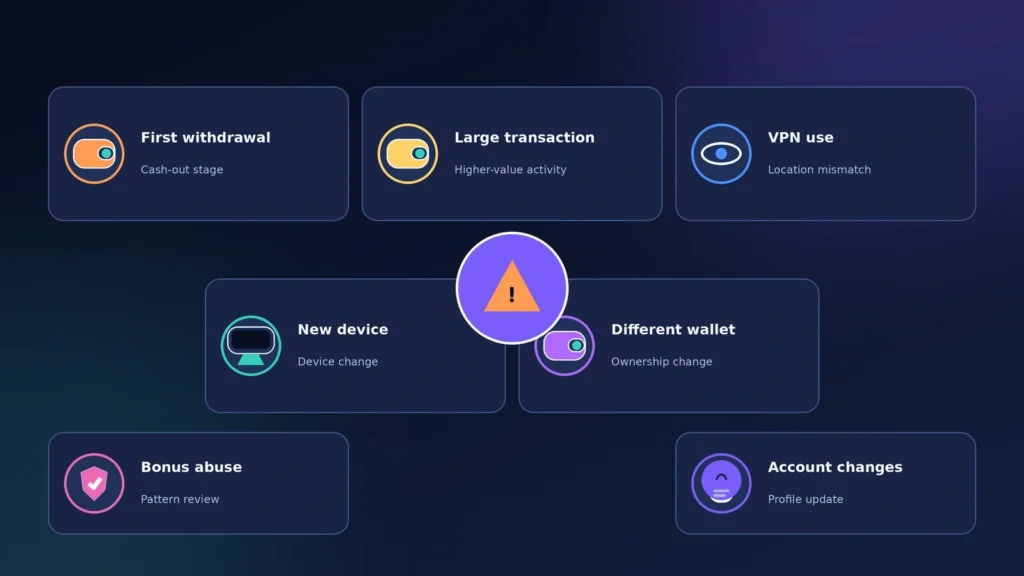
What Documents Can a No-KYC Casino Request?
The exact request depends on what the operator is trying to establish.
Government-issued identification
This can include:
- Passport.
- Driver’s license.
- State or national identity card.
The document should normally be valid, clearly visible and consistent with the account information.
Proof of address
Common examples include:
- Utility bill.
- Bank or credit-union statement.
- Government correspondence.
- Tax document.
Operators commonly require a recent document showing the customer’s name and residential address.
Selfie or liveness check
The casino may request:
- A selfie holding the identification document.
- A short video.
- A live facial-verification session.
- A photograph containing a handwritten date or reference code.
This is generally intended to show that a real person is present and controls the submitted document.
Payment-ownership evidence
This can include:
- A statement showing a relevant transaction.
- A partially obscured payment card.
- An exchange withdrawal record.
- A signed message from a crypto wallet.
- A small verification transaction.
Never reveal wallet seed phrases, private keys, full payment-card security codes or online-banking passwords. A legitimate casino does not need those credentials to verify ownership.
Source-of-funds information
For enhanced checks, the casino may ask for:
- Payslips.
- Bank statements.
- Business-income records.
- Exchange purchase history.
- Evidence of an earlier crypto investment or transfer.
The request should be proportionate to the issue being investigated. Ask the operator to explain what it needs and why before sending a large collection of financial documents.
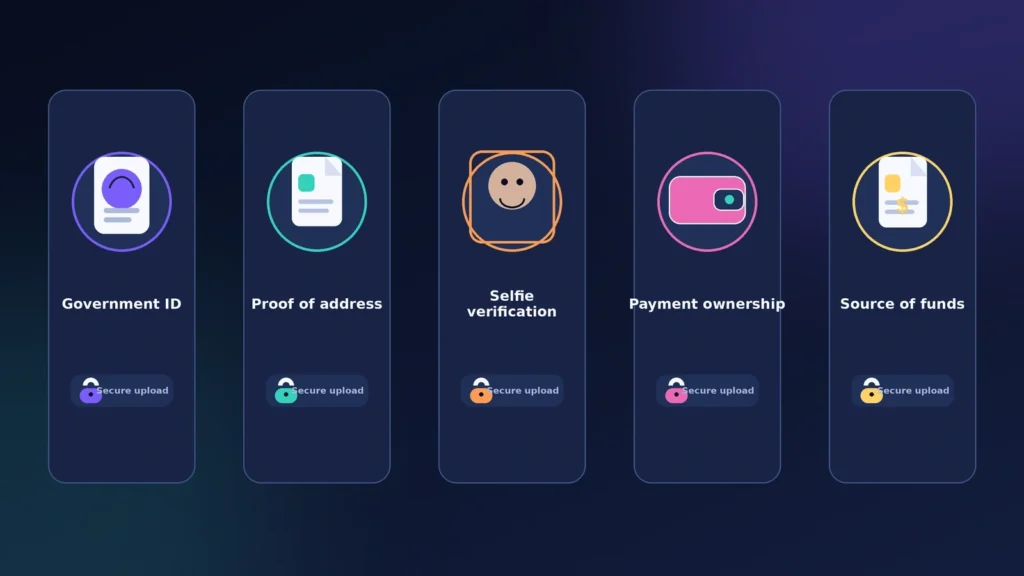
Does Crypto Make a Casino Account Anonymous?
Not necessarily.
Crypto can reduce the amount of banking information shared directly with a casino, but a wallet address still creates an on-chain transaction record. A casino or blockchain-analysis provider may evaluate:
- The source wallet.
- Transaction history.
- Links to exchanges or other services.
- Exposure to sanctioned addresses.
- Connections to previously flagged funds.
- Whether the withdrawal destination is consistent with the account.
A wallet address can function as an account identifier, but it does not automatically establish a player’s age, physical location or legal identity.
“Private,” “pseudonymous” and “anonymous” should therefore not be treated as interchangeable terms.
Is It Misleading to Advertise No KYC and Then Ask for ID?
It depends on the exact advertising, terms and licensing jurisdiction.
It may be reasonably disclosed when:
- The casino says “no KYC at signup.”
- The verification triggers are explained prominently.
- The terms identify withdrawal or risk-based checks.
- The operator describes the documents it may request.
- The customer can review the policy before depositing.
It becomes more concerning when:
- The casino promises “no verification ever.”
- Important exceptions appear only after a deposit.
- The website and terms contradict each other.
- Support cannot identify the clause authorizing the request.
- New documents are repeatedly demanded without explanation.
- The casino uses verification only as a reason to delay payment.
- The operator has no identifiable company, license or complaint process.
Some regulators impose rules on when verification should occur. UK Gambling Commission rules, for example, state that a withdrawal request must not trigger a demand for information the operator could reasonably have requested earlier, while preserving checks required by other legal obligations. That rule applies to UK-licensed operators, not automatically to offshore casinos serving other markets.
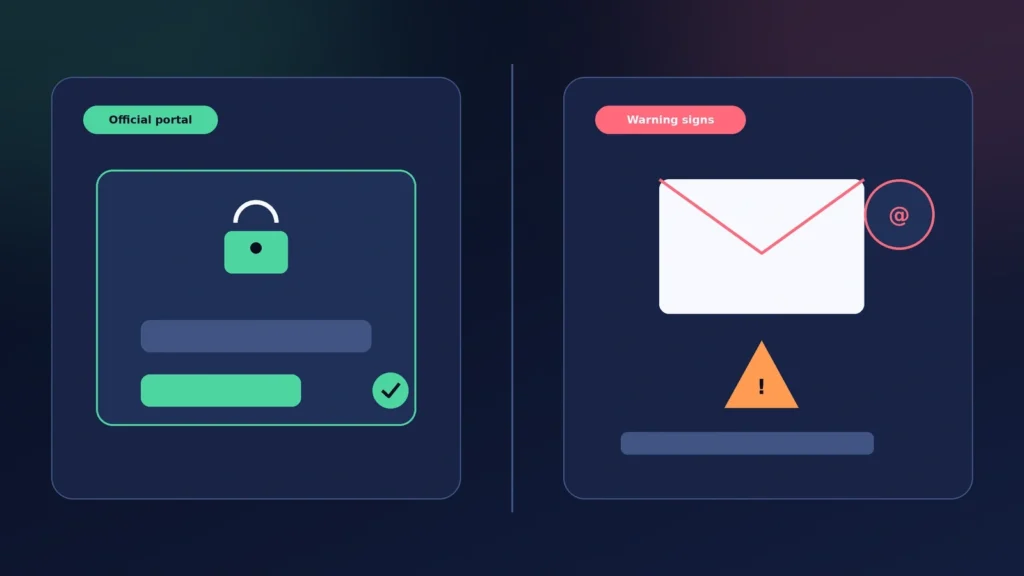
Warning Signs in a Verification Request
Take extra care when:
- The message comes from an unrelated email domain.
- Support requests a seed phrase, private key or password.
- The casino asks for payment outside its normal platform.
- The requested documents have no connection to the issue.
- No privacy policy or data processor is identified.
- The operator refuses to identify its legal entity.
- The casino has removed or changed the relevant terms.
- The request is delivered through an unofficial Telegram or social-media account.
- Support threatens immediate balance confiscation without citing a term.
- The casino continues adding requirements after each completed step without explaining what remains unresolved.
A legitimate KYC request can be inconvenient and still be genuine. The important questions are whether it is authorized, proportionate, secure and connected to an identifiable operator.
What to Do When a No-KYC Casino Asks for Verification
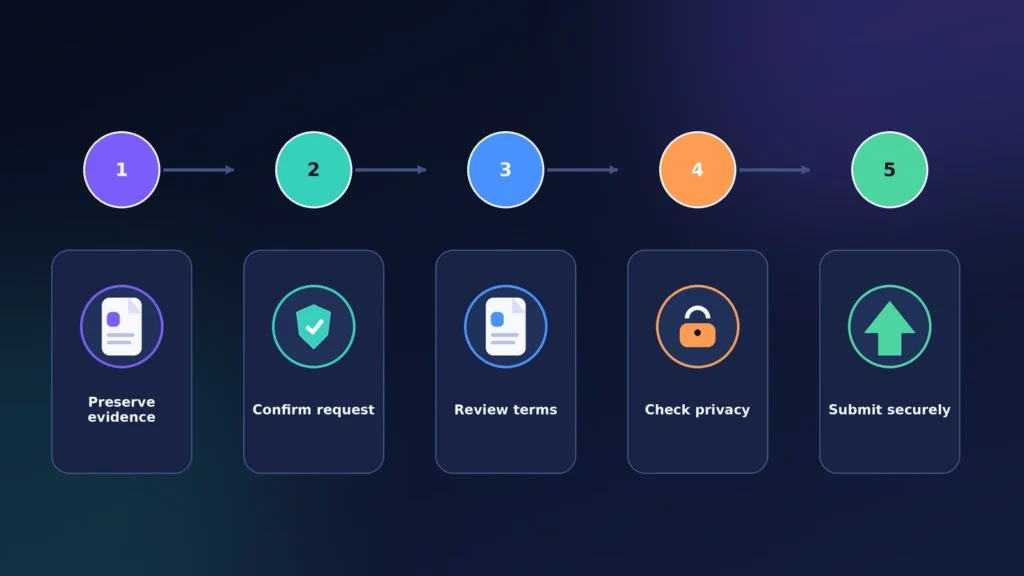
1. Stop and preserve the evidence
Save copies of:
- The no-KYC advertising that influenced the decision.
- The casino’s terms and KYC policy.
- The version or date of the terms.
- The withdrawal confirmation.
- Emails and live-chat transcripts.
- The exact verification request.
- Account and transaction references.
Terms can change, so retaining the version that applied when the account was created can be important during a dispute.
2. Confirm that the request is genuine
Log in through the casino’s normal website rather than following an unexpected email link.
Verify:
- The sender’s domain.
- Whether the same request appears in the account dashboard.
- Whether official support confirms the case reference.
- Which company will process the documents.
- Where the documents will be stored.
Do not send documents through a public chat, social-media direct message or unknown upload page.
3. Find the clause that authorizes verification
Search the terms for:
- KYC.
- AML.
- Verification.
- Enhanced due diligence.
- Source of funds.
- Withdrawals.
- Payment ownership.
- Prohibited countries.
- Duplicate accounts.
- VPN.
- Suspicious activity.
Ask support to quote or link to the specific provision being applied.
4. Ask what triggered the review
The operator may not disclose its fraud-detection rules, but it should usually be able to identify the category of review, such as:
- Identity confirmation.
- Payment ownership.
- Location verification.
- Duplicate-account investigation.
- Source-of-funds review.
- Account-security check.
Request a complete list of required documents and accepted formats before uploading anything.
5. Review the privacy and retention policy
Check:
- The name of the data controller.
- Whether a third-party identity provider is used.
- Where data is processed.
- How long documents are retained.
- How deletion requests are handled.
- Whether data may be shared with regulators or fraud-prevention services.
- How a data incident would be reported.
Do not assume a casino has strong privacy controls merely because it accepts cryptocurrency.
6. Submit only what is necessary
Use the operator’s secure verification portal whenever possible.
Redact unrelated information only when the operator confirms that redaction is permitted. For example, an operator may need to see the account holder’s name, address and relevant transaction but not every unrelated purchase on a statement.
A watermark such as “Submitted to [operator] for verification on [date]” can reduce reuse risk, but confirm that watermarked documents are accepted before adding one.
7. Use the formal complaint process when necessary
If the request appears inconsistent with the casino’s terms:
- Submit a written complaint to the operator.
- Request a final written decision.
- Follow the complaint procedure stated in the terms.
- Contact the named regulator or alternative-dispute-resolution provider when the license offers that route.
- Provide the relevant evidence and timeline.
The Curaçao Gaming Authority’s current complaints policy requires licensed operators to provide an internal complaints process and an alternative-dispute-resolution option. The CGA itself does not decide individual gambling-transaction complaints, although it may use complaint information for supervision and enforcement.
Available assistance therefore depends on whether the casino’s license is valid, the named dispute-resolution route and whether the regulator accepts individual complaints.
How to Avoid Surprise Verification Before Depositing
No checklist can guarantee that a casino will never request documents. It can, however, reveal whether the operator is being candid about the possibility.
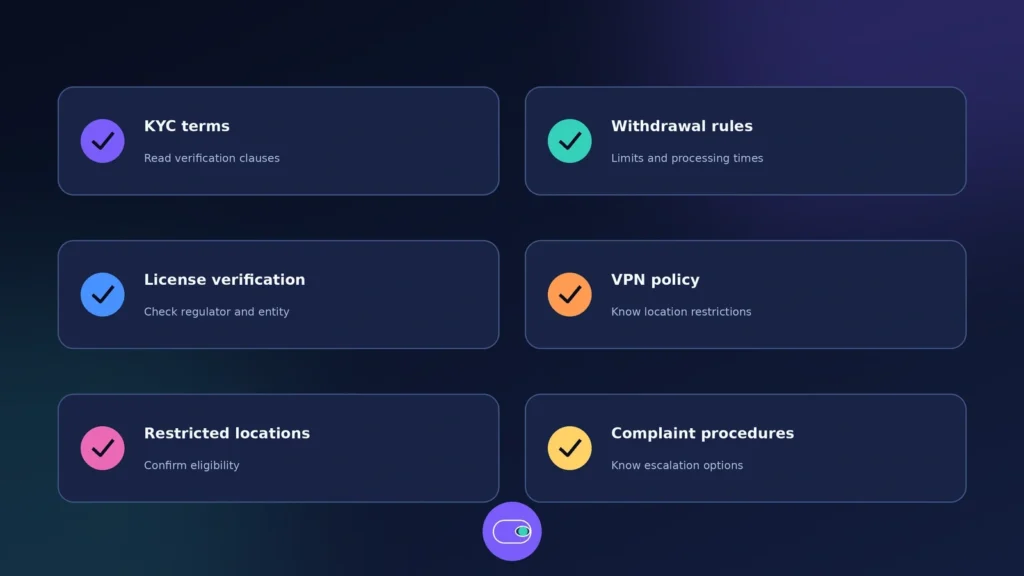
Pre-deposit verification checklist
| Check | What to look for |
| No-KYC wording | Does it say no KYC ever, no KYC at signup or no routine KYC? |
| Terms | Can verification be requested “at any time”? |
| Withdrawal policy | Is KYC required before the first or certain withdrawals? |
| Transaction limits | Are daily, monthly or cumulative thresholds stated? |
| Payment ownership | Must the withdrawal return to the original method or wallet? |
| Restricted locations | Is the player’s country or state excluded? |
| VPN policy | Is VPN use prohibited or subject to additional review? |
| Bonus terms | Are multiple accounts, households or devices restricted? |
| Legal entity | Is the operating company named? |
| License | Can the license be confirmed in the regulator’s current register? |
| Privacy policy | Does it identify document processors and retention practices? |
| Complaints process | Is there a regulator, ADR provider or formal escalation route? |
The Curaçao Gaming Authority maintains an online license register and warns that license status can change, so users should check the current entry rather than relying only on a logo in a casino footer.
Written support answers can also be useful. Before depositing, ask:
“Can this account be required to complete document verification before withdrawal? If so, what events or limits can trigger it?”
A vague answer such as “usually not” is not the same as a contractual guarantee.
U.S. Players Should Distinguish Offshore and State-Regulated Casinos
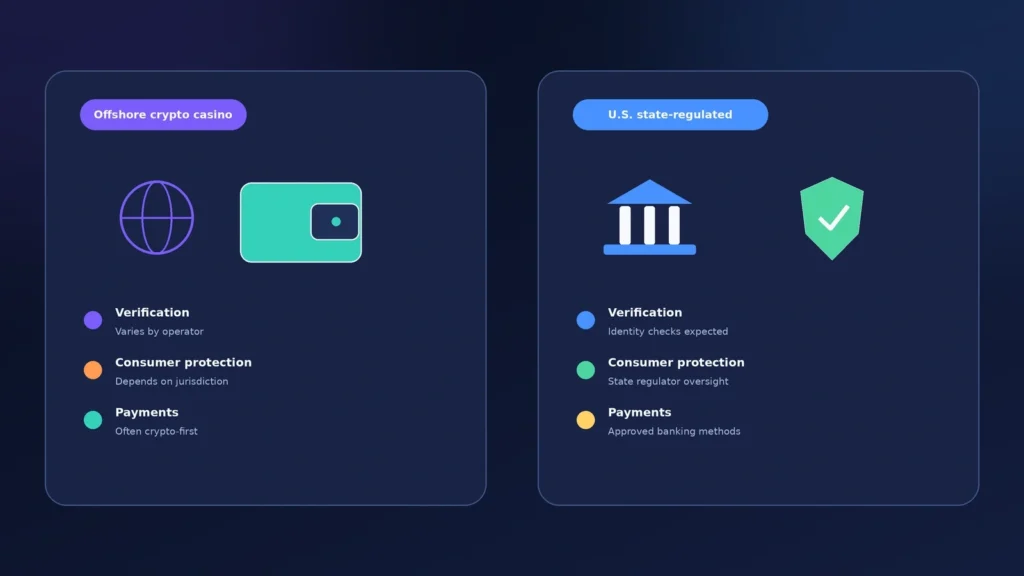
A casino can hold a foreign license while remaining unlicensed in the player’s state.
These are separate questions:
- Is the company licensed somewhere?
- Is the service legally available where the customer is located?
- Does the customer’s state regulator supervise the operator?
- Is there an effective complaint process for that customer?
The American Gaming Association’s State of Play map illustrates that gaming legality and regulation differ by state and product type.
State-regulated online casinos generally do not operate as no-KYC casinos. In New Jersey, for example, operators must verify identity and legal age before internet or mobile gaming and retain information showing how and when verification occurred.
An offshore license may establish that a foreign regulator supervises some aspects of the business. It does not automatically provide the same account protections, dispute procedures or enforcement options available through a U.S. state regulator.
How Verification Affects Crypto Withdrawal Speed
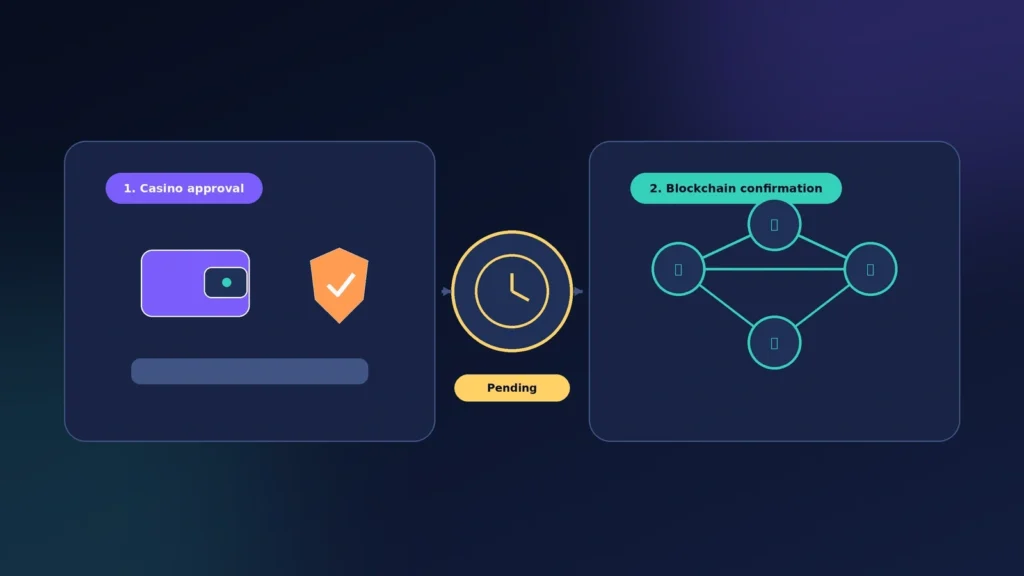
A crypto withdrawal has at least two separate stages:
- Operator approval: The casino reviews the account, balance, bonus conditions, security indicators and verification status.
- Blockchain settlement: The casino broadcasts the transaction and the network confirms it.
Blockchain speed affects only the second stage.
A casino can advertise rapid on-chain payments while retaining a manual review before the transaction is sent. Therefore, “instant withdrawal” should be understood as a processing claim subject to the operator’s stated checks—not as a guarantee that every request will immediately appear on-chain.
This distinction explains why a transaction can remain “pending” even when the selected cryptocurrency normally confirms quickly.
The Practical Meaning of “KYC May Be Required”
The phrase usually means:
The casino does not request full identity documents from every customer at signup, but it reserves the right—or may have a regulatory obligation—to request them when account activity, transaction value or risk indicators meet its verification criteria.
It should not be interpreted as either:
- “You will definitely be asked for ID,” or
- “You will definitely never be asked for ID.”
The quality of a no-verification casino should therefore be judged partly by how clearly it answers four questions:
- What checks occur at signup?
- What can trigger additional verification?
- What happens to withdrawals during the review?
- What complaint route exists if the request is disputed?
Conclusion
No-KYC casinos still ask for verification because the label often describes a low-friction signup process rather than a permanent exemption from identity checks.
Verification may be introduced when a withdrawal is requested, cumulative account activity reaches a threshold, payment ownership cannot be confirmed, a bonus investigation begins or a fraud, location, sanctions or AML alert appears.
Before depositing, read the KYC, withdrawal, restricted-country, payment and complaint provisions together. When a request arrives, confirm that it came from the real operator, ask which contractual clause and review category apply, and submit sensitive information only through a verified, secure channel.
The safest assumption is simple: unless the terms expressly and credibly say otherwise, any custodial casino account may eventually be subject to verification.
FAQ
It may be able to, depending on its license, terms and the customer’s jurisdiction. Many casinos disclose that verification can be requested for withdrawals, security reviews or compliance checks. A “no KYC at signup” statement does not normally remove a clearly disclosed later-verification clause.
However, an operator’s conduct may be questionable when it promises no verification under any circumstances and then introduces undisclosed requirements after accepting a deposit.
Withdrawal is when funds leave the platform, so operators may perform account-ownership, fraud and payment checks at that stage. Some also use delayed KYC and verify only when account activity reaches a threshold.
In strongly regulated markets, delaying predictable checks until withdrawal may be restricted. Under the UK rules discussed earlier, a withdrawal must not become the first occasion for requesting information that could reasonably have been collected sooner.
It means verification is conditional rather than automatically required from every customer at registration. The casino may request documents if a transaction limit, security event, payment mismatch, location concern or other risk condition occurs.
The exact triggers should be checked in the operator’s current terms.
A casino may suspend processing when verification is required under its terms or regulatory procedures. What happens next depends on the reason for the request, the applicable rules and the operator’s account-closure policy.
Ask for the specific clause, a written decision and the formal complaint procedure. Do not assume that declining verification automatically allows the casino to confiscate the balance.
There is no reliable industry-wide timeframe. Completion depends on document quality, review volume, third-party verification, the complexity of the issue and whether additional evidence is required.
A trustworthy operator should confirm that the documents were received, identify anything missing and provide a realistic status update rather than repeatedly restarting the process.
A wallet may establish control over a payment address, but it does not necessarily prove legal identity, age, residence or source of funds. A casino may therefore accept wallet-only registration but request additional evidence during a later review.
That distinction is why wallet-only registration can still be followed by broader identity, source-of-funds or compliance checks.
It can. A VPN can produce a conflict between the registered country, IP address, device location and withdrawal information. The casino may then request location evidence or investigate whether the account was accessed from a restricted jurisdiction.
Never use a VPN to bypass an operator’s geographic restrictions.
Confirm that the request appears inside the official account, comes from the casino’s real domain and is supported by official customer service. Check the upload URL, privacy policy and legal entity.
A legitimate casino should never request a wallet seed phrase, private key, complete card security code or online-banking password.