
New York’s chances of legalizing full online casino gaming in the near term have taken another political hit after Assembly Racing and Wagering Committee Chair Carrie Woerner signaled that she views iGaming as a development that remains years away, even though legislation she sponsors is still active in Albany.
During an August 11 panel at the Racing and Gaming Conference in Saratoga Springs, Woerner described legalization as “perpetually five years out,” according to Gambling Insider’s report from the conference.
Her comments are particularly significant because Woerner currently chairs the Assembly committee responsible for racing and wagering legislation and sponsors an active proposal to legalize interactive casino gaming. The remark does not formally kill that bill, but it substantially weakens the case for expecting a near-term breakthrough.
Key Facts
| Detail | Current Status |
| Main development | Key Assembly chair signals long wait for iGaming |
| Speaker | Carrie Woerner |
| Role | Chair, Assembly Racing and Wagering Committee |
| Comment date | August 11, 2026 |
| Assembly iGaming bill | A6027 |
| Senate companion | S2614 |
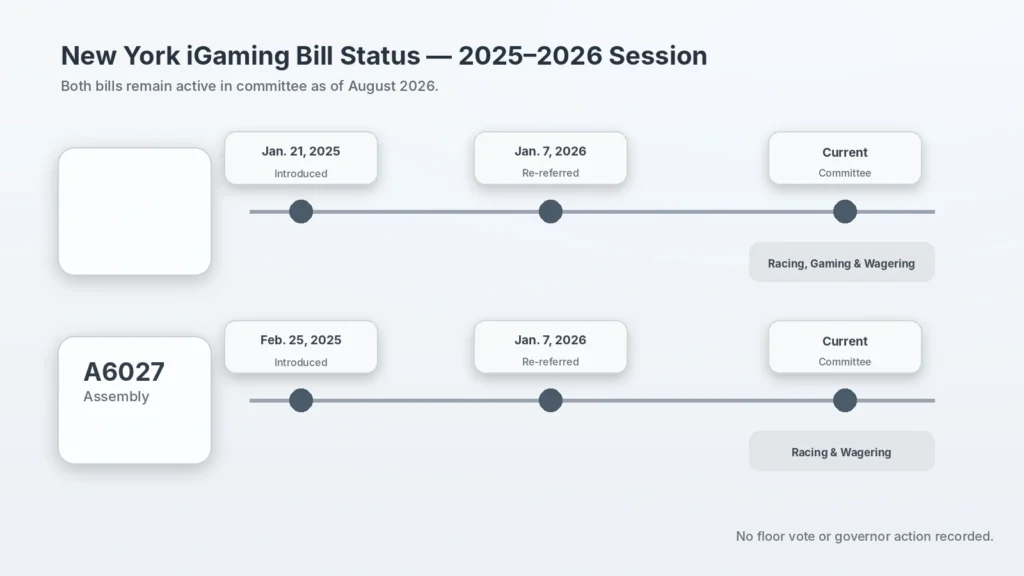
| A6027 status | In Assembly committee |
| S2614 status | In Senate committee |
| Current NY online casino status | Not authorized |
| Sweepstakes casino status | Dual-currency cash-prize model prohibited |
| Formal five-year deadline? | No |
Woerner Delivers a Cautious Message at Saratoga
The official Racing and Gaming Conference at Saratoga agenda confirms that Woerner appeared on the August 11 session titled iGaming: Inevitable Innovation or Passing Fancy?
The panel was specifically designed to examine whether momentum for online casino legalization was growing or fading in markets including New York and Virginia. Other panelists represented FanDuel, Ifrah Law and the National Association Against iGaming.
Woerner’s reported answer leaned clearly toward the “fading” side of that question.
The phrase “perpetually five years out” should not be interpreted as a commitment to reconsider the issue in exactly 2031. It reads instead as an expression of skepticism that the political conditions needed for legalization are likely to develop soon.
That distinction is important because no legislation has been withdrawn as a result of the comments.
New York Still Has an Active Online Casino Bill
New York lawmakers have not abandoned iGaming legislatively.
Woerner sponsors Assembly Bill A6027, which would authorize interactive gaming and interactive lottery gaming.
The bill was originally introduced on February 25, 2025 and was re-referred to the Assembly Racing and Wagering Committee on January 7, 2026. It remains there as of August 13 and has not reached an Assembly floor vote.
The proposal is broader than online poker.
It would create a framework covering internet-based versions of slot machines, table games, live-dealer casino games and other Gaming Commission-approved products.
Players would need to be at least 21 and physically located within New York when placing interactive gaming wagers.
The fact that Woerner sponsors the legislation makes her new assessment more noteworthy. It suggests the obstacle is not simply a lack of legislative language; it is the political environment surrounding whether lawmakers are prepared to move that language forward.
Senate Proposal Is Also Stuck in Committee
Senator Joseph Addabbo continues to sponsor the corresponding Senate Bill S2614.
Like A6027, it would establish regulated interactive casino gaming and remains in the Senate Racing, Gaming and Wagering Committee after being re-referred on January 7, 2026.
The sponsor memo argues that legal iGaming could generate approximately $1 billion in annual state tax revenue as well as around $150 million in one-time licensing fees.
Those figures are projections from supporters of the legislation. They should not be treated as guaranteed revenue or an independent forecast adopted by the state.
The broader political problem is that the revenue argument has so far not been sufficient to overcome concerns about gambling harms, competition for consumer spending and the effect of mobile casino gaming on existing businesses.
Consumer Spending Has Become Part of the Debate
According to the supplied reporting, Woerner also raised concerns about stagnant disposable income.
Her argument was that when household discretionary income is not growing, additional spending on gambling can mean less spending on restaurants, movies, retail stores and other local businesses.
That is a policy concern rather than a proven forecast of what New York iGaming would do to local commerce.
Research and industry debate over casino cannibalization remain mixed, and the effect can vary depending on market structure, tax policy, existing gambling availability and consumer behavior.
Still, the concern matters politically because it shows that New York lawmakers are evaluating iGaming as more than a potential tax-revenue source.
Problem-Gambling Policy Is Already a Legislative Priority
New York’s Assembly has also been spending political capital on strengthening controls around gambling that is already legal.
On March 25, Woerner joined Assembly Speaker Carl Heastie in announcing an Assembly problem-gambling legislative package covering mobile sports betting and casino protections.
The measures included proposals involving electronic self-exclusion requests, stronger identity-verification requirements, risk assessments for bettors, gambling-advertising rules, activity statements and access to problem-gambling treatment.
The package does not itself prevent future iGaming legislation.
However, it demonstrates that player protection, underage access and gambling-harm concerns are already prominent issues in the committee Woerner chairs.
That makes any future online casino bill likely to face extensive scrutiny over how its safeguards would work in practice.
Online Casinos Are Still Unlawful in New York
For players, the current legal position has not changed because of the Saratoga discussion.
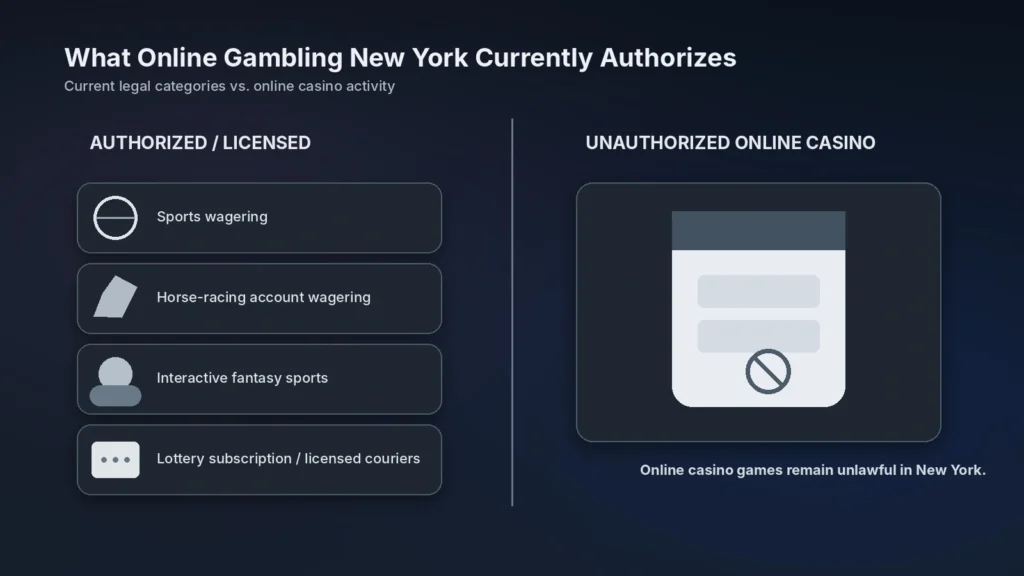
In May, the New York State Gaming Commission’s online-gambling guidance stated that New Yorkers can legally use approved mobile sports wagering, licensed advance-deposit horse wagering, authorized online raffles, registered fantasy sports and certain lottery services.
The Commission separately says online casinos, offshore operators, prediction markets and casino-style sweepstakes platforms are not authorized under the state’s current gambling framework.
That point is especially relevant for users researching no-KYC and crypto casinos.
An offshore website being technically accessible from New York does not make it part of the state-regulated market. NoKYCcasino.us explains the wider distinction between accessibility, foreign licensing and state authorization in Are No-KYC Casinos Legal in the United States?.
Players should not treat the lack of a regulated New York iGaming market as permission to bypass state restrictions through offshore operators or location-masking tools.
New York Has Tightened Rules Around Sweepstakes Casinos
The state has actually moved in the opposite direction on some online casino-style products.
In December 2025, legislation backed by Senator Addabbo formally prohibited dual-currency sweepstakes casino games that offer cash or cash-equivalent prizes.
The New York sweepstakes casino law gives regulators authority to act against prohibited sweepstakes gaming and sets penalties for violations.
At the time, Addabbo argued that shutting down unregulated sweepstakes operations could eventually create a cleaner foundation for regulated iGaming discussions.
Woerner’s August comments suggest that even after the sweepstakes issue was addressed, a full online casino framework still faces substantial political resistance.
Land-Based Casino Development Is Moving Faster
New York’s reluctance toward mobile casino gambling does not mean the state has stopped expanding gaming altogether.
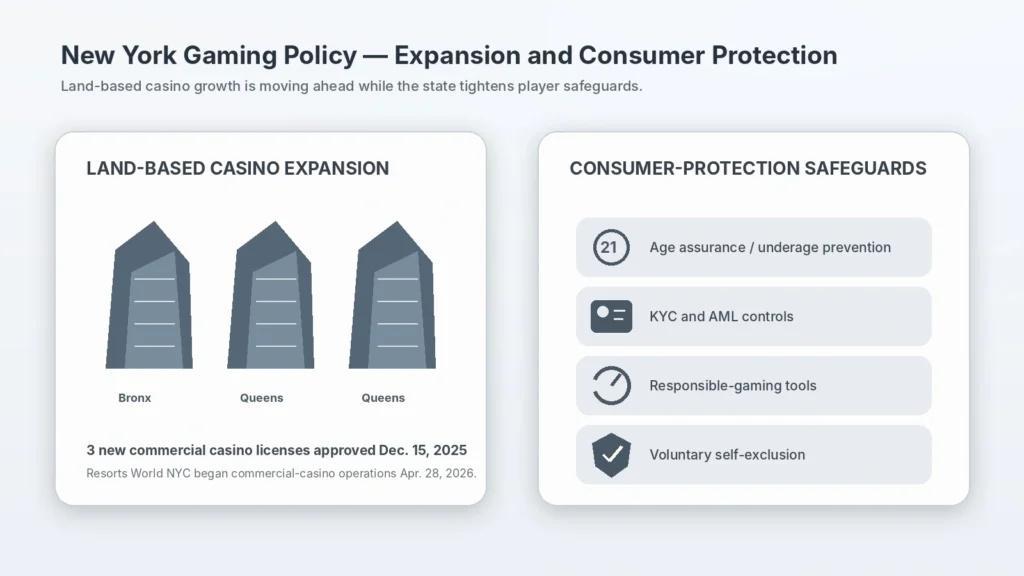
Full-scale land-based commercial casino development in the New York City region has been progressing separately from online casino legalization.
For example, NoKYCcasino.us has tracked the Bally’s Bronx casino development following the state licensing process and subsequent construction-related filings.
Those projects are regulated physical casino developments and should not be confused with iGaming.
The difference also helps explain why policymakers may not see an urgent need to introduce another major expansion category while new brick-and-mortar casino investments are still developing.
That is an inference rather than an official explanation from New York lawmakers, but it is relevant context for the state’s broader gaming calendar.
U.S. iGaming Expansion Remains Uneven
The source article argues that online casino expansion nationally is moving much more slowly than sports betting did after the U.S. Supreme Court’s 2018 PASPA decision.
New York’s current position supports that broader observation, but the national picture requires qualification.
Maine became another state to authorize online casino gaming in early 2026 when Governor Janet Mills allowed legislation granting online gambling rights to Wabanaki tribal governments to become law. Implementation required additional regulatory work rather than producing an immediate statewide consumer launch.
That means it is more accurate to distinguish between states that have authorized iGaming and states where full regulated platforms are already operational.
New York remains outside both categories for full real-money online casinos.
Woerner’s Comments Do Not Formally Kill iGaming
The most important qualification in this story is that nothing legally changed on August 11.
No bill was withdrawn.
No committee voted against A6027.
No governor vetoed an iGaming proposal.
No new statute prohibits the Legislature from taking the issue up again.
Woerner’s comments matter because of her institutional role and because she sponsors the Assembly bill itself. They are therefore a powerful indicator of the political outlook—but still an indicator, not formal legislative action.
If political conditions, state revenue needs or public sentiment change, lawmakers could revisit the issue.
There is currently no confirmed timetable for that to happen.
What This Means for New York Players
For New York residents, the practical situation remains straightforward:
There is no state-regulated real-money online casino market in New York as of August 13, 2026.
Licensed mobile sports betting and several other regulated gambling products remain available, but they should not be confused with online slots, blackjack, roulette or live-dealer casino gaming.
Likewise, “no KYC,” cryptocurrency acceptance or a foreign gaming license does not transform an offshore operator into a New York-authorized casino.
The state’s rules apply based on the gambling activity and jurisdiction, not the payment method or registration process.
What Happens Next?
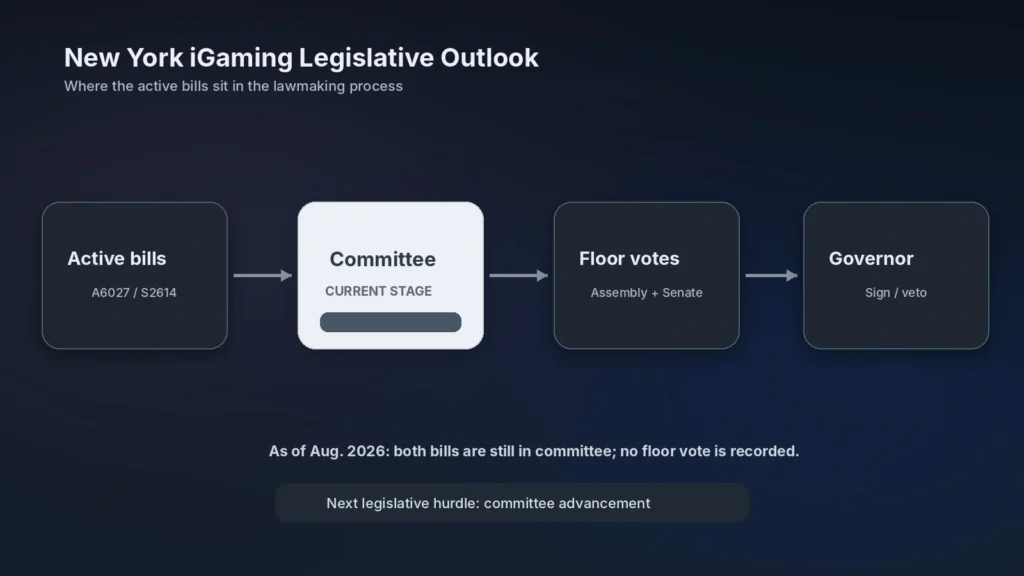
The immediate question is whether A6027 or S2614 receives renewed attention when lawmakers return to the issue.
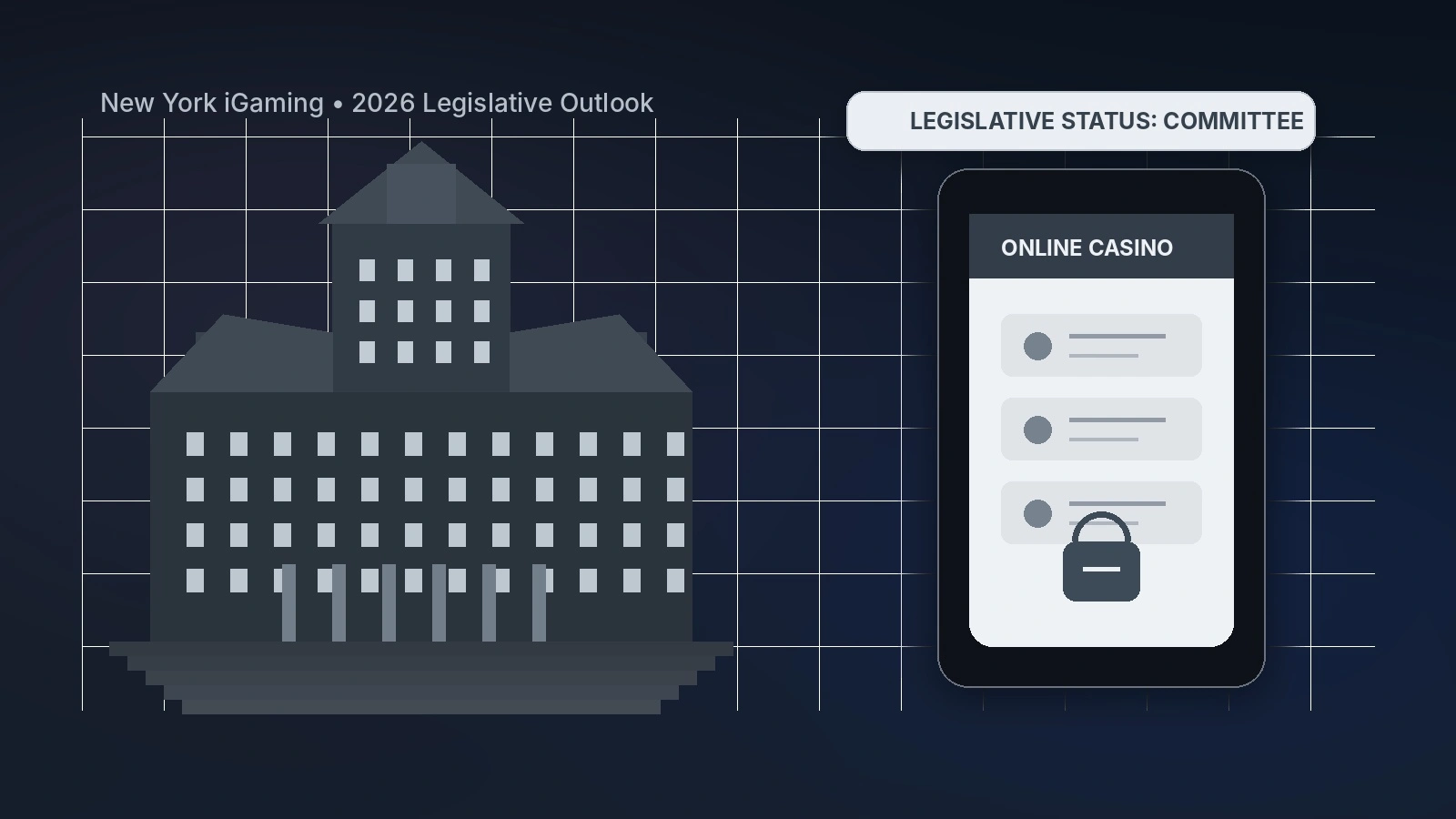
As of August 13, both measures remain in committee without floor passage.
Woerner’s comments make a near-term breakthrough appear less likely, but they do not create a formal five-year moratorium.
Future catalysts could include changes in state finances, performance data from regulated iGaming states, the rollout of Maine’s new market, additional research on gambling harms or a shift in political support within the Legislature.
Until one of those developments produces concrete legislative movement, New York should not be presented as a state on the verge of launching regulated online casinos.
Responsible Gambling Context
New York’s current debate shows that iGaming legalization involves not only potential tax revenue but also questions about availability, advertising, verification, underage access and gambling-related harm.
Readers who gamble through legally authorized products can review NoKYCcasino.us’ responsible gambling resources covering spending limits, risk awareness, self-exclusion and signs that gambling may be becoming harmful.
Gambling should not be treated as a source of income, and the absence of a regulated online casino market does not make unauthorized alternatives safer or legally approved.
FAQ
No. New York currently authorizes products including licensed mobile sports wagering, fantasy sports and certain horse-racing and lottery transactions online, but the state Gaming Commission says real-money online casinos are not authorized.
No. A6027 and its Senate companion S2614 remain active but are still in their respective racing and wagering committees. Neither has reached final passage.
Gambling Insider reported that Woerner described legalization as “perpetually five years out” during an August 11, 2026 panel at the Racing and Gaming Conference at Saratoga.
No. The comment was a political assessment, not a law, deadline or moratorium. The Legislature could act earlier if political conditions change.
Dual-currency sweepstakes casino games offering cash or cash-equivalent prizes are prohibited under legislation enacted in December 2025. New York’s Gaming Commission also says online casino and sweepstakes-style gambling are not currently authorized.